The Ogre, Again
A poem for wartime

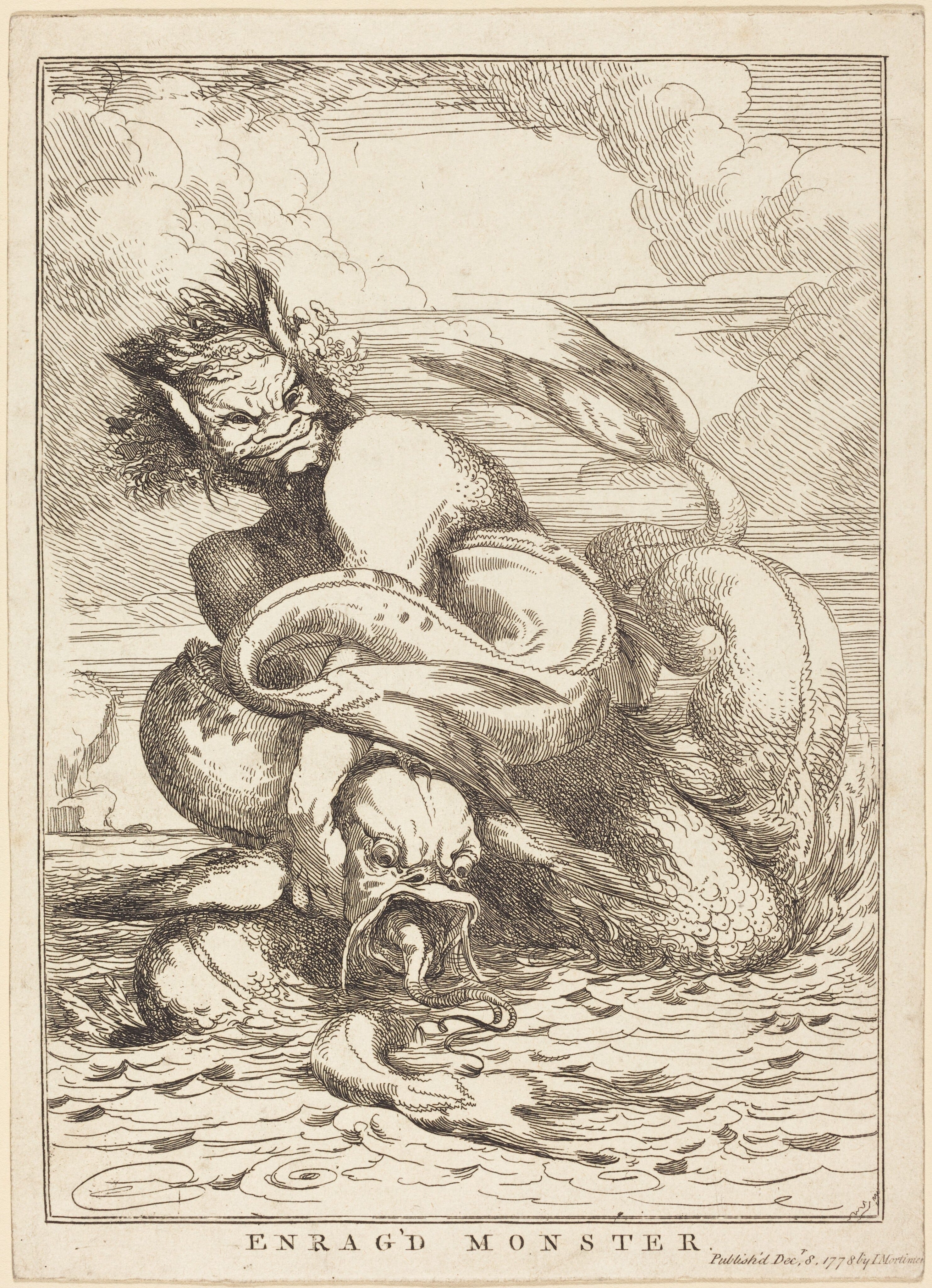
I’ve written about this poem before, but in the weeks since my country began dropping bombs on Iran, it’s been back on my mind:
August 19681
The Ogre does what ogres can,
Deeds quite impossible for man,
But one prize is beyond his reach,
The Ogre cannot master speech.
About a subjugated plain,
Among its desperate and slain,
The Ogre stalks with hands on hips,
While drivel gushes from his lips.
-- W.H. Auden
I probably pay more attention to the news than is good for me. Blame it on a political science degree and the departmental requirement — for four years in college — that I read the physical New York Times every day. Blame it, too, on an inveterate nosiness and curiosity about how and why humans choose to organize themselves in certain ways, and how some select few come to draw public interest and wield power. Not everyone finds this interesting; some people (hi to a few of my dearest friends!) find it dispiriting and distracting; but I can’t look away from the daily drama of public life, at both the national and local level.
So I have been following with interest the official speech, such as it is2, from our President and Secretary of Defense about the war we have started with the Islamic Republic of Iran. And I have noticed something peculiar: a variety of explanations have been offered for bombing3, blockading, raining down hell (with glory to God!), and maybe even eliminating an entire civilization. The arguments have been shifting, contradictory, bombastic but empty, and occasionally untethered from the facts on the ground.4 Kind of like drivel.
Back in 1968, when Auden wrote his poem, the Soviets who were enacting an Ogre-like beatdown on their Warsaw Pact vassals could not talk with the Czechs and Slovaks. To do so would be to concede the whole point of the reforms they were intent on repressing: that deliberation, mutual give-and-take, the back and forth of conversation are desirable means with which to shape the contours of human life. And the current American administration — despite reports to the contrary — cannot talk with the Iranians, not really. In part, of course, this is because the current Iranian regime is made up of generally bad actors who have a historically tortured relationship to truth. In part it is because the current American regime has shown an equally tortured relationship to truth. What possible dialogue could happen between parties who both wield language more as weapon than constructive tool?
But the standoff between the mullahs and the American administration isn’t really why I can’t get this poem out of my head. As terrible as this war is, it’s not what sits at the heart of my alarm. I don’t think the subjugated plain is only over in Iran. What frightens and angers me is that the current presidential administration cannot or will not talk with us, the citizens whom they ostensibly serve.
I’ve been listening, and here’s what I have not heard: there has been no sustained case to the country for the action our military is undertaking. There has been no attempt to convince our elected representatives to vote for or against this action, which would make them subject to the approval of their voters.5 And here is what I have seen and heard, scrolling through news accounts and ruffling through the paper: celebration of our “war-fighters”, memes of bombing runs set to arena rock and cut with video game footage, muddled invocations of God’s blessing for American warriors in Jesus’ name, a delight in all of the explosions and destruction. In other words, just drivel.
I don’t think this is only — or even primarily — a matter of incompetence, or disdain, or authoritarian aspiration. I mean, it might be a little of all of them? But Auden’s poem, I think, names more plainly what is afoot in our public life right now. The Ogre “cannot master speech” because true speech — the attempt to lay bare one’s interior construction of things in a way that is intelligible to others, and that opens what has been said to judgment and then acceptance or rejection — cannot coexist with a will to power.
We speak with others when we wish to communicate: note the etymological kinship to communion. Genuine communication is a kind of sharing of oneself. It is not undertaken in a spirit of domination; it bespeaks a sweetly human hope for a meeting of the minds. When we try to actually speak (not just make acceptable verbal noises), we are reaching towards one another in hope of connection and even understanding, and that requires trying to find at least somewhat even ground. The best you can hope from such an endeavor to do is to persuade, to convince, to find a common spot from which both parties can say, “Yes, I see that.” A person, institution, or regime committed to authentic communication will always evade and resist domination, because conversation requires two equally privileged voices.6
But the Ogre does what ogres can: conquest and subjugation. And it’s usually impressive! An ogre can “obliterate” a country’s navy, Air Force, top leadership. An ogre can cow an entire political party into subservience, because his threats and insults carry weight. An ogre can muscle a large and diverse country into an enervated acceptance that this is just how things are, that he is no different from his predecessors; he’s just the first one honest enough not to pretend to noble motives.
But the Ogre cannot master speech. He stands on the portico of the White House, or in a neat pantsuit with a cross necklace in the press room, or behind a Pentagon rostrum, and all I see is spittle and drool. All I hear is drivel. The people uttering these verbal noises are humans, not monsters; they are created in the image of God. They hold public office, and I pray for them daily. More than that, Jesus bore their humanity as fully as he bore mine. They are my siblings in shared need of his redemptive work, and our destiny is bound up together. But for all of that, they have abdicated a basic human responsibility we owe to one another: responsible, accountable, and articulate speech. They’ve put on Ogre costumes, and the masks — for now — seem to fit.
In August 1968, Soviet tanks rolled into what was then Czechoslovakia. The Czechoslovaks had been experimenting with liberalizing reforms, and their Soviet overlords were not amused. The movement to develop “socialism with a human face” had its roots in Prague’s literary circles: writers, poets, publishers, and journalists were audacious enough to start speaking a little more freely, to try officially-frowned-upon ideas on for size, to rehabilitate the reputations of authors suppressed by the regime. A fleet of mechanized killing machines and over 150,000 foreign troops marched in to — among other ends — shut them up. They succeeded, sort of. Until 1989.
That summer, W.H. Auden watched the headlines unfold across the border from his seasonal home in Kirchstetten, Austria. This poem was his response.
Can you call it official speech if most announcements about the war take place on the President’s proprietary for-profit social media site, or at weird and potentially Third-Commandment-violating Pentagon prayer services? I guess yes, yes you can?
And on that last clause: it’s a serious charge, I know. But for crying out loud. When the Secretary of Defense reads a prayer for destruction of his enemies that is from Ezekiel 25 via Pulp Fiction: what are we doing here, guys? Certainly not speaking with care or requisite hesitation about the Creator of heaven and earth in whom we live and move and have our being.
Which, devastatingly, has included the mistaken bombing of a girls’ school — a tragedy that has already slipped out of the mainstream American conversation, though not out of the minds of the parents who lost their daughters.
This CNN article is a helpful explainer of the contradictory dynamics at work in the first days of the war; as time has gone on, the messaging about what we have achieved, want to achieve, and require in order to stop fighting has remained muddled.
To be fair, our elected representatives seem perfectly happy not to be asked. Which is not great.
You might say that it is impossible for any power regime to be interested in genuine communication, and you’d probably be right to some extent. But still: go back and read the Federalist papers. The Founders had their failures, and sure, many of them didn’t want an equal playing field that would require them to surrender their human chattel, but they nevertheless retained a touching faith that democratic deliberation — even if ultimately self-interested — was possible; that it wasn’t just power and manipulation all the way down. Why else write the Federalist Papers, for Pete’s sake?
This faith is still endearingly present in the American populace, though waning. We may expect our politicians to lie to us now; we may thoroughly distrust the lot of them — but we still get mad about it. We want authenticity! in our elected officials, and we keep casting about constantly for the person who will drain the swamp and deal forthrightly. This faith has led us to some weird and misguided places, but I hope it doesn’t die.